


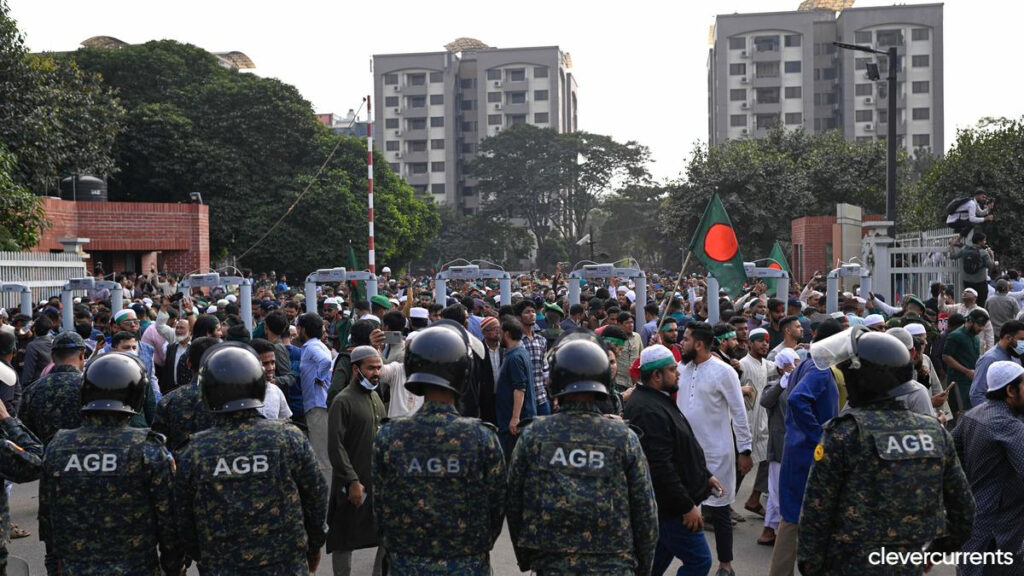
Bangladesh is once again in turmoil. Just days after the nation was rocked by the death of prominent student leader Sharif Osman Hadi — an event that ignited widespread protests and political tensions — another key youth figure has been shot in broad daylight, intensifying an already fraught national moment.
Who Was Sharif Osman Hadi — and Why His Death Sparked Outrage
Sharif Osman Hadi was more than just a student leader. A veteran of the massive 2024 student uprising that helped reshape Bangladesh’s political landscape, Hadi had become a symbol of youth activism and dissent. His outspoken criticism of established political forces and his anti-India stance made him a polarizing yet influential figure in Bangladeshi politics.
On December 12, 2025, Hadi was shot by masked assailants in Dhaka. Despite being flown to Singapore for advanced medical treatment, he succumbed to his injuries days later.
News of his death sent shockwaves through the country. Tens of thousands gathered for his funeral under heavy security, while protests erupted nationwide — from Dhaka to other major cities — with demonstrators demanding justice and accountability.
Violence Spreads: Second Leader Shot in Khulna
Barely days after Hadi’s killing dominated headlines and streets, Muhammad Motaleb Sikdar — a senior student leader linked with the National Citizen Party’s youth and labour wing — was shot in the head in Khulna. The attack occurred on December 22 in the Sonadanga area, and though initial medical reports suggest the bullet grazed his skull and that he is now in stable condition, the incident dramatically escalates fears of politicized violence.
The targeting of Sikdar — an organiser who had been actively involved in grassroots mobilisation — adds a worrying new dimension to the unrest. It signals that clashes are no longer confined to protests alone but are increasingly spilling into targeted attacks on individual political actors.
Protests, Politics, and Pre-Election Tensions
These shootings are unfolding against the backdrop of Bangladesh’s approaching national elections (scheduled for February 2026). The political climate is already strained after last year’s student uprising toppled longtime leader Sheikh Hasina and ushered in an interim administration led by Nobel laureate Muhammad Yunus.
Hadi had been preparing to contest the elections, and his death has added fuel to a volatile mix of political grievances — particularly among young voters and activists disillusioned with traditional parties.
Protests have often turned violent, with clashes between demonstrators and security forces reported in multiple cities. The government has appealed for calm and promised investigations, but the atmosphere remains tense.
Diplomacy, Domestic Strife, and Wider Implications
The unrest has also spilled into Bangladesh’s foreign relations. Anti-India sentiment, which had been rising, has become a rallying cry for some protesters. There are reports that Dhaka might scale back its diplomatic presence in India as tensions simmer over perceived external influence.
At home, authorities face mounting pressure to restore order, protect civic space, and ensure that the electoral process remains credible and peaceful. But with violence breaching personal safety, targeting leaders beyond protest lines, and impassioned public demonstrations continuing, Bangladesh finds itself at a critical crossroads.
Conclusion: A Nation in Flux
Bangladesh’s streets reflect a deeper struggle — one between generations, political visions, and ideas of justice. The deaths and shootings of young leaders like Hadi and Sikdar are not isolated incidents. They are symbols of a larger reckoning with the direction of the country’s politics, its social fabric, and its future.
As the world watches, the coming weeks will be pivotal: whether the nation can channel its energy into democratic renewal — or succumb to escalating cycles of violence — remains the defining question of this moment.