


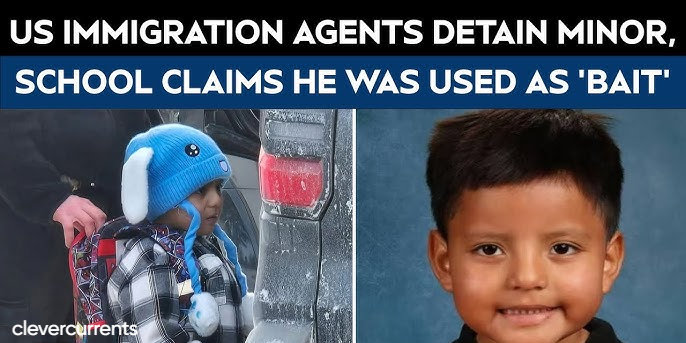
A controversial immigration enforcement operation in the United States has sparked outrage after a five-year-old child was detained by immigration agents, with school officials alleging that the child was deliberately used as “bait” to lure his undocumented father into custody.
What Happened?
According to school authorities and immigration advocates, US Immigration and Customs Enforcement (ICE) agents detained the young boy after he arrived at school as usual. Officials at the school claim agents were aware that the child’s father, who is undocumented, regularly dropped him off and picked him up. The school alleges that agents waited for this routine moment, effectively using the child as leverage to identify and apprehend the parent.
The incident reportedly occurred near school premises, raising serious concerns about the safety and emotional well-being of children amid heightened immigration enforcement efforts.
School’s Allegation: “Using a Child as Bait”
School administrators strongly condemned the operation, stating that law enforcement should never involve children—especially those as young as five—in immigration enforcement actions.
“This crosses a moral line,” a school official said, adding that schools should be safe spaces where children are protected from fear and trauma. The school further emphasized that the child was visibly distressed during the incident and required counseling support afterward.
Immigrant rights organizations echoed these concerns, calling the action “inhumane” and “psychologically damaging.”
ICE Response
ICE has denied intentionally using the child as bait, stating that the operation was conducted in accordance with federal law and targeted an adult individual with an outstanding immigration violation. Officials maintained that agents did not intend to detain the child and claimed they acted responsibly once the situation unfolded.
However, critics argue that regardless of intent, the outcome reflects a broader pattern of aggressive enforcement tactics that fail to consider the welfare of children.
Growing Backlash and Public Reaction
The incident has ignited public backlash across the US, particularly among educators, child welfare advocates, and immigrant communities. Social media platforms were flooded with criticism, with many questioning how such actions align with stated government policies that prioritize family unity and child protection.
Several lawmakers have also demanded an investigation into the incident, calling for clearer limits on where and how immigration enforcement operations can take place.
Impact on Immigrant Families
Advocates warn that incidents like this create widespread fear among immigrant families, discouraging parents from sending their children to school or accessing essential services.
“Parents are terrified,” said an immigration rights activist. “When schools are no longer safe, children suffer the most.”
Psychologists have also highlighted the long-term emotional effects such experiences can have on young children, including anxiety, trust issues, and fear of authority figures.
A Broader Policy Debate
The detention of the five-year-old comes amid renewed debates over US immigration enforcement practices, particularly involving families and minors. While federal guidelines have previously discouraged arrests near schools and childcare centers, enforcement actions continue to raise questions about how strictly these policies are followed on the ground.
Civil rights groups are now urging the administration to strengthen protections for children and designate schools as absolute “no-enforcement zones.”
Conclusion
The detention of a five-year-old in an immigration operation has once again brought the human cost of immigration enforcement into sharp focus. Whether or not the child was intentionally used as bait, the incident has intensified calls for reform, accountability, and greater compassion in how immigration laws are enforced—especially when children are involved.
As investigations continue, the case is likely to remain a flashpoint in the ongoing national debate over immigration, family rights, and child welfare in the United States.