
Introduction
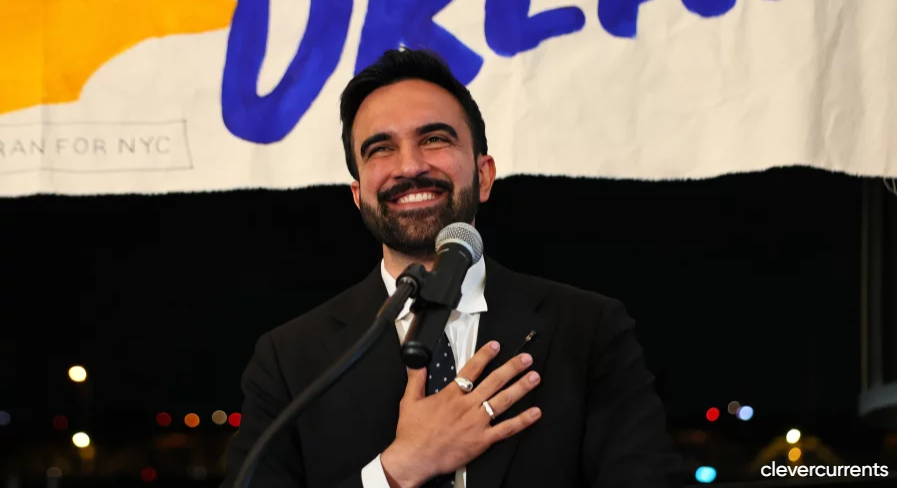
In a landmark moment for urban politics, 34-year-old Zohran Mamdani was elected as the 111th mayor of New York City on November 4 2025 — a win that marks not just a change in leadership but a major shift in the city’s political landscape.
His victory is historic for several reasons: he becomes the city’s first Muslim mayor, the youngest mayor in more than a century, and the face of a progressive, grassroots-driven movement.
Background & Campaign Roots
Mamdani’s ascent wasn’t overnight. He served as a member of the New York State Assembly for the 36th district (Queens) from 2021 onwards.
He launched his mayoral campaign emphasising affordability, housing justice, public transport reforms, and a progressive economic agenda. For example: rent freezes for rent-stabilised units, free buses, city-owned grocery stores, and tax increases on the wealthy.
In July, he secured the Democratic nomination by defeating former governor Andrew Cuomo in the primary — a shock to many given Cuomo’s long political career and name-recognition.
Significance of the Win
-
Representation & Firsts: Mamdani’s win breaks multiple barriers — first Muslim mayor of NYC, youngest in over 100 years, and representing South Asian diaspora communities in a major U.S. city.
-
Ideological Shift: His candidacy and victory represent a shift toward progressive, grassroots politics rather than the business-as-usual machine. Many saw this as a rebuke of traditional political power in the city.
-
Young Voters & Diverse Coalition: His campaign mobilised young voters, minority communities (Black, Hispanic, Asian), and first-time voters who felt the cost of living crisis. Polls showed strong support across these demographics.
What This Means for New York City
-
Affordability & Housing: With housing costs soaring and many New Yorkers squeezed by rents, Mamdani’s focus on affordability resonates. He plans to tackle core city issues from a fresh vantage.
-
Public Services & Transit: His pledge to make city buses free and improve public transport reflects a broader vision of cities where mobility and services aren’t a luxury.
-
Political Landscape: His success may influence how urban politics in the U.S. evolve — younger leaders, more progressive platforms, and coalition-building across traditional divides.
-
Challenges Ahead: With bold promises come high expectations. Delivering on housing, transport reform, managing city budgets, and building consensus in a complex urban environment will demand both vision and pragmatism.
Key Questions & Considerations
-
How will Mamdani balance ambitious progressive policies with fiscal realities in a city as complex and costly as New York?
-
Can his coalition (young voters, minorities, progressives) stay engaged during the hard work of governance?
-
How will established power structures — city bureaucracy, business interests, state government — respond to a mayor who styles himself as a movement leader rather than a traditional politician?
-
What will his approach to policing, public safety and transit look like in practice, especially in a city with high expectations and deep structural challenges?
Final Thoughts
Zohran Mamdani’s victory is more than a personal triumph — it signals a moment of change. It’s a win for representation, for progressive politics at the municipal level, and for many New Yorkers who felt unheard. But it’s also the beginning of a new chapter in governance, not just campaigning. How he steers the city from here will test whether hope and vision can translate into effective action.