
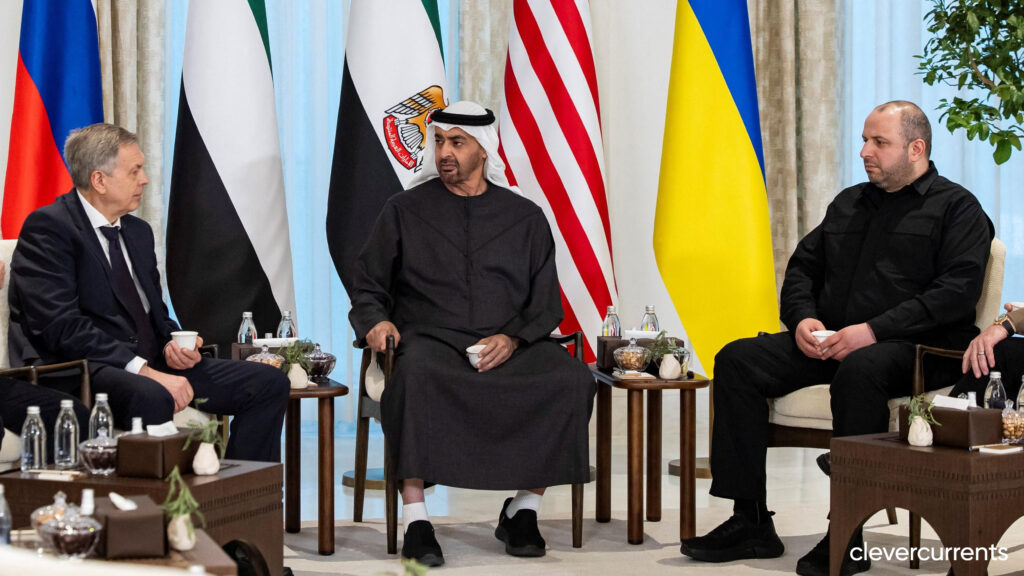
In recent days, Ukrainian President Volodymyr Zelenskyy has signalled a fresh push in diplomacy, revealing that the next round of high-level peace negotiations between Ukraine, Russia, and the United States is likely to take place in Abu Dhabi in early March. This development comes after several weeks of intensive discussions in Geneva — but also against the backdrop of continued conflict and stalled progress on the ground.
🔹 What Zelenskyy Announced
Following meetings between Ukrainian and U.S. officials in Geneva, Zelenskyy said his government expects a trilateral session — involving Ukraine, Russia and the United States — to be held in Abu Dhabi, United Arab Emirates, in early March. He described this next meeting as a necessary step toward preparing a later summit at the leadership level.
Zelensky emphasized that:
-
There is now “greater readiness” for the trilateral format.
-
Finalizing agreed-upon frameworks on security guarantees and other issues is essential before leaders can meet.
-
A leaders-level meeting could help resolve the most difficult issues — but Russia has yet to show genuine willingness to pursue peace.
These comments reflect Kyiv’s long-held view that leaders must sit down directly to break the stalemate — something Zelenskyy has repeatedly called for.
🔹 Why Abu Dhabi? The Diplomatic Logic
Abu Dhabi has become one of the central venues for peace diplomacy in 2026. Earlier rounds of U.S.-brokered trilateral talks between Ukraine, Russia, and the U.S. also took place there in late January and early February.
There are a few reasons why the UAE capital is emerging as a preferred meeting place:
-
Neutral ground: The UAE offers a politically neutral setting outside Europe — useful for all sides.
-
International support: It signals to global actors, especially in the Middle East, that peace negotiations remain serious diplomatic business.
-
Continuity: Building on previous discussions in the same city helps maintain continuity in talks.
🔹 The Stakes: What’s Being Negotiated
At the core of these talks are three major challenges:
🛡️ Security Guarantees
Ukraine is pushing for firm international security guarantees that would deter future invasions or aggression. These guarantees are a cornerstone of Kyiv’s negotiating position, as Ukraine’s constitution forbids ceding territory.
🔁 Economic & Reconstruction Issues
While the primary focus is ending the war, discussions also involve post-war reconstruction, investment frameworks, and economic support — parts of a broader ‘prosperity package’ being jointly shaped by Ukraine and the U.S.
🕊️ Leaders’ Summit
Zelenskyy argues that substantive diplomatic breakthroughs require leaders themselves — namely, Ukraine’s President and Russia’s President — to engage directly. However, Moscow has repeatedly dismissed direct talks with Zelenskyy, citing skepticism about his legitimacy.
🔹 The Conflict That Continues
Despite these diplomatic efforts, fighting on the ground continues. Russian strikes on Ukrainian cities have persisted in recent weeks, and key territorial disputes — particularly over eastern regions like the Donbas — remain unresolved.
The contrast between peace diplomacy and ongoing conflict highlights the central challenge of these negotiations: bridging very different expectations between Ukraine, which seeks full territorial integrity and security guarantees, and Russia, which has so far insisted on retaining control over parts of Ukraine.
🧠 What to Watch Next
As the anticipated Abu Dhabi meeting draws closer in early March, several questions will be in focus:
-
Will the three sides agree on a concrete roadmap toward leaders’ summit?
-
Can Kyiv, Washington and Moscow narrow differences on security guarantees and ceasefire terms?
-
What role will broader international pressure — including sanctions or diplomatic support — play?
The outcome of these talks could shape the next phase of one of Europe’s longest and most consequential conflicts — or, at least, the diplomatic path forward.