
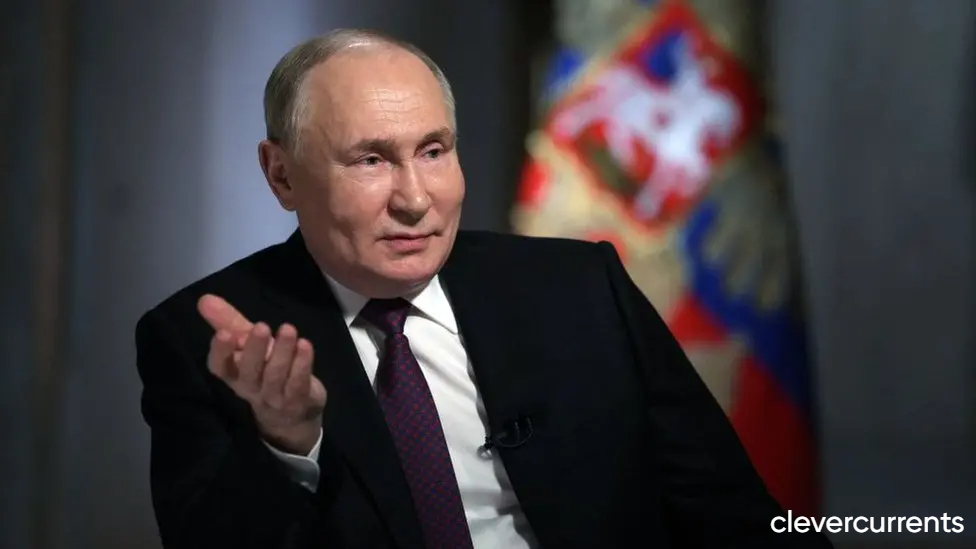
Russian President Vladimir Putin has once again outlined his vision for how and when the war in Ukraine might reach an end — a conflict that has reshaped global geopolitics, fractured international alliances, and pushed Europe into its most volatile security crisis since the Cold War. His message, delivered with characteristic firmness, suggests that peace is possible, but only on Moscow’s terms.
Putin’s Conditions for Ending the War
In his latest remarks, Putin implied that Russia would “finish the war” only when its strategic objectives are fully met. Although he avoided listing every detail, the core demands remain consistent with Russia’s long-held position:
-
Recognition of Russian control over annexed territories
-
Security guarantees preventing NATO expansion further east
-
A demilitarized or politically neutral Ukraine
-
A settlement that ensures Russia’s long-term regional influence
For Putin, the conflict is not merely a border dispute — it is a struggle over what he views as Russia’s historical sphere of influence and security perimeter. Any endgame, therefore, must reshape the regional order in a way that protects Russian interests.
Kyiv’s Response: No Concessions on Sovereignty
Unsurprisingly, Ukraine rejects Putin’s framing entirely. President Volodymyr Zelenskyy maintains that:
-
Ukrainian territory is non-negotiable
-
Peace can come only after a full Russian withdrawal
-
Any compromise rewarding annexation could set a dangerous global precedent
This fundamental disconnect keeps both sides locked in a political and military stalemate. Neither is ready to concede, and both believe time is ultimately on their side.
International Stakes: Why the War’s End Matters Globally
The outcome of the war is about much more than the Russia-Ukraine relationship:
-
NATO’s credibility hinges on Ukraine’s survival as an independent state.
-
European security depends on the war not spilling across borders.
-
Global markets continue to react to disruptions in grain, energy, and trade routes.
-
China, the U.S., and the EU are watching closely, each calculating how the conflict shapes future power balances.
For the world, Putin’s recent remarks may offer clues — but not clarity. They indicate willingness to talk, but only from a position of perceived strength.
Is a Negotiated End Possible?
Diplomats believe there are two likely pathways to an eventual peace:
1. A Negotiated Truce
If battlefield conditions stabilize, both sides may be pressured — domestically or internationally — to accept a ceasefire without a full political settlement.
2. A Forced Reset
A major shift on the battlefield or in political leadership on either side could alter the terms dramatically, opening a door to real negotiations.
For now, both Russia and Ukraine are preparing for a long conflict.
Conclusion
Putin’s statement on when Russia will finish the war offers insight but little immediate hope for peace. His terms remain far from what Kyiv — and much of the international community — considers acceptable.
Until those positions move closer, the endgame of the Ukraine conflict will remain uncertain, shaped not only by military strength but by complex global diplomacy.