
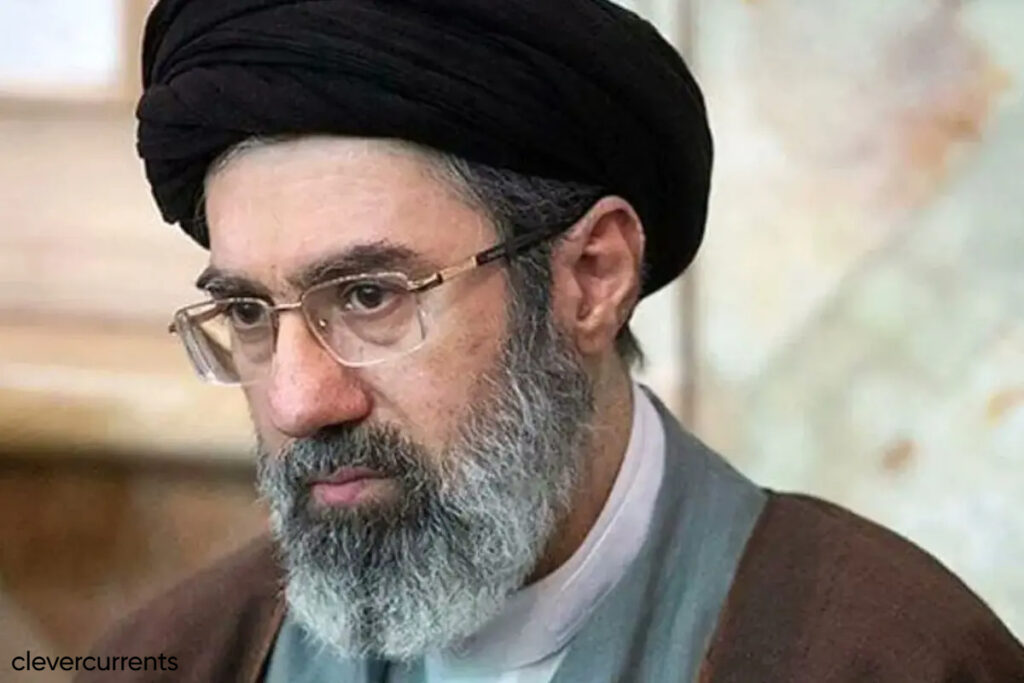
In a stunning turn of events amidst regional turmoil and war, Mojtaba Khamenei, the second-eldest son of the late Supreme Leader Ayatollah Ali Khamenei, has been reportedly elected as Iran’s new Supreme Leader by the country’s Assembly of Experts — the body constitutionally responsible for choosing the Islamic Republic’s highest authority.
This moment marks only the second leadership transition in the Islamic Republic’s 47-year history, the first being in 1989 when Ayatollah Ali Khamenei succeeded the founder of the revolution, Ayatollah Ruhollah Khomeini.
👤 Who Is Mojtaba Khamenei?
Mojtaba Khamenei is a 56-year-old cleric and influential political figure who has long operated behind the scenes within Iran’s power structures. Although he has never held an official public office, he has been widely seen as a central gatekeeper within the leadership and is known for his close ties to the Islamic Revolutionary Guard Corps (IRGC) — Iran’s powerful military and political force.
He served in the Iran-Iraq War and later pursued religious education in Qom. In recent years, Iranian state media have referred to him as “Ayatollah,” a title that has bolstered his religious credentials and suggested deeper positioning within clerical circles.
Despite this, many analysts note that he lacks the traditional clerical authority and public political experience usually associated with the role of Supreme Leader — raising important questions about both his legitimacy and the future direction of the Iranian system.
🏛️ The Succession and the Role of the Assembly of Experts
Under Iran’s constitution, the Assembly of Experts — an 88-member body of elected clerics — must elect a Supreme Leader when the position becomes vacant.
According to multiple reports, Mojtaba’s election came amid intense pressure from the IRGC, which reportedly influenced the Assembly’s deliberations.
However:
-
Iran’s constitution and revolutionary rhetoric strongly reject hereditary rule, and the idea of leadership passing from father to son contradicts those principles.
-
Ayatollah Khamenei himself reportedly did not include Mojtaba on a list of potential successors he prepared before his death — making this turn of events even more extraordinary.
The unique circumstances of Mojtaba’s elevation — in the midst of external military pressure and internal crisis — have made this transition unusually opaque and controversial.
🌍 Regional Context and Broader Implications
This leadership change comes against a backdrop of intense conflict. Amid ongoing hostilities between Iran and Israel — with involvement from the United States — Iranian power structures have been under severe strain. Israeli forces reportedly struck a building connected with the Assembly of Experts in Qom during the succession process.
Iran’s political system is highly complex, blending religious authority with military-bureaucratic power. The IRGC’s influence has grown significantly over the past decade, and Mojtaba’s ties to this institution suggest that his leadership may emphasize security and ideological consolidation.
Some analysts speculate that this could push Iran further into hardline policies both domestically and abroad, while others argue that the new Supreme Leader might act more as a symbolic figurehead — with real power distributed among Iran’s ruling elite.
🧠 What This Means for Iran’s Future
The election of Mojtaba Khamenei — a figure long associated with Iran’s inner circles of power, rather than popular governance — raises several crucial questions:
🔹 Legitimacy and Popular Perception
Will the Iranian public and clerical establishment accept a hereditary-style transition that appears to contradict revolutionary ideals? How will reformists and moderate clerics respond?
🔹 Role of the IRGC
With strong backing from the Revolutionary Guards, will the IRGC’s influence expand further into political and religious governance?
🔹 Regional and Global Impact
How will Iran’s leadership under Mojtaba navigate relations with the U.S., Israel, and other regional powers at a time of heightened conflict?
📌 In Summary
-
Mojtaba Khamenei has been reported as elected Supreme Leader of Iran by the Assembly of Experts following his father’s death.
-
His selection is controversial due to the norm against hereditary succession, and reflects intense influence from the IRGC.
-
The transition unfolds amid war-time conditions, regional conflict, and political uncertainty.
This is a historic moment in Iran’s history — one that is still evolving and will likely shape the geopolitical landscape of the Middle East for years to come.