
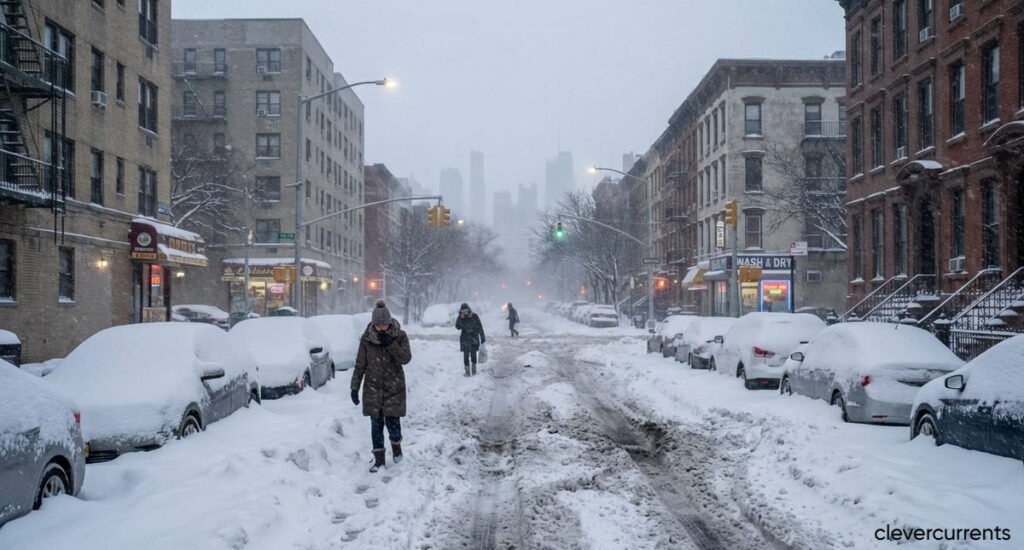
A powerful Nor’easter has brought life to a standstill across the northeastern United States, dumping record-breaking snowfall, shutting down airports, and forcing millions indoors. The historic winter storm has particularly battered New York City, where Mayor Zohran Mamdani declared a state of emergency as blizzard conditions intensified.
What Is a Nor’easter?
A Nor’easter is a powerful storm that typically forms along the East Coast of the United States, fueled by the clash between cold Arctic air and warmer Atlantic moisture. These storms are known for heavy snowfall, hurricane-force winds, and coastal flooding — and this one has proven no exception.
Meteorologists say the current system rapidly intensified offshore, creating whiteout conditions from Boston to Philadelphia.
New York Under Emergency
As snowfall rates climbed to several inches per hour, Mayor Mamdani announced a blizzard emergency for New York City. The declaration triggered:
-
Suspension of non-essential travel
-
Closure of public schools
-
Reduced public transportation services
-
Deployment of thousands of sanitation workers and snowplows
Officials urged residents to stay indoors, warning that visibility in some areas had dropped to near zero. Emergency responders reported delays due to blocked roads and abandoned vehicles.
Travel Chaos Across the Region
Airports across the Northeast experienced massive disruptions. Hundreds of flights were canceled as airlines struggled with snow-covered runways and dangerous wind gusts. Major hubs in New York and Boston saw cascading delays that are expected to impact travel nationwide.
Train services were also scaled back, and highways resembled ghost roads as authorities discouraged unnecessary travel.
Power Outages and Coastal Flooding
Strong winds exceeding 50 mph knocked down trees and power lines, leaving tens of thousands without electricity. Utility crews worked through the storm to restore service, but officials warned that full recovery could take days.
Coastal areas faced additional threats from storm surge and tidal flooding, particularly in low-lying neighborhoods.
Economic and Social Impact
The storm’s timing has amplified its economic impact. Businesses were forced to shut down, stock markets saw temporary disruptions, and supply chains experienced delays. For hourly workers, the shutdown means lost wages, while small businesses brace for financial strain.
However, emergency officials emphasized that early warnings and preparedness helped prevent more severe consequences.
Climate Questions Resurface
Extreme winter storms have sparked renewed debate over climate change and its role in intensifying weather systems. While Nor’easters are not uncommon, meteorologists note that warmer ocean temperatures can fuel stronger precipitation events.
What Happens Next?
Forecasters predict that snowfall will taper off as the system moves into the Atlantic, but frigid temperatures are expected to follow. Icy roads and dangerous wind chills could prolong disruptions for several days.
As the Northeast begins digging out, the storm stands as one of the most powerful Nor’easters in recent years — a stark reminder of winter’s force and the importance of preparedness.