
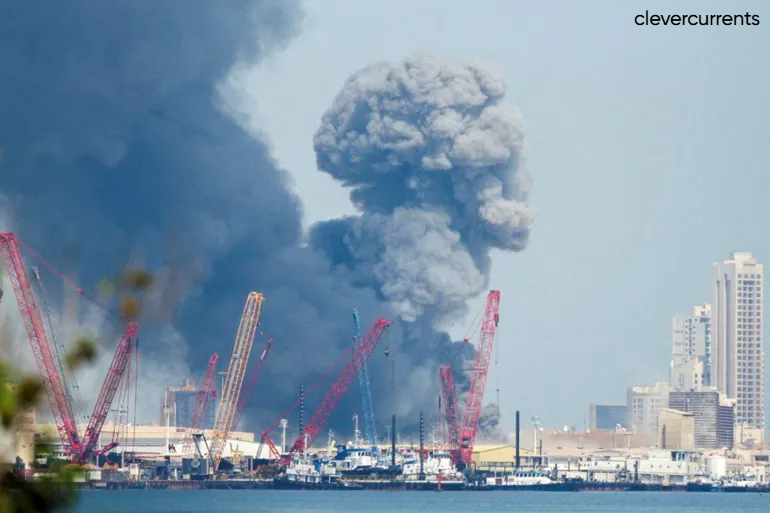
In the early hours of March 1–2, 2026, the calm skies above major Gulf cities were shattered by a new wave of explosions. Across Dubai (UAE), Doha (Qatar), and Manama (Bahrain), residents reported loud blasts, rising smoke, and emergency sirens — marking a dramatic escalation in Iran’s ongoing campaign of retaliation against US and allied forces in the region.
This second day of strikes highlights how swiftly a regional standoff has spiraled into one of the most serious Middle East crises in years.
🔥 What Happened? The Blasts Explained
📍 Waves of Explosions in Gulf Cities
On Sunday morning, multiple explosions were heard in:
-
Dubai: Thick smoke over the Jebel Ali port, with air defences intercepting incoming missiles and drones.
-
Doha: Loud blasts echoed through Qatar’s capital, with air defence systems activated.
-
Manama: Sirens and explosions reported in Bahrain’s city centre as part of the bombardment.
Official statements are still limited about casualties or structural damage from this specific day’s blasts, but these incidents came after a day of heavy Iranian missile and drone launches that struck military and civilian infrastructure across the Gulf.
🧨 The Bigger Picture: Why This Escalation?
These latest explosions are not isolated events but part of a larger Iranian retaliation that began after a coordinated US–Israeli military offensive inside Iran killed Supreme Leader Ayatollah Ali Khamenei and other senior figures.
In response, Iran’s Revolutionary Guards announced that all US and Israeli targets in the Middle East are now legitimate targets, unleashing waves of ballistic missiles and attack drones toward:
-
US military bases in the region
-
Strategic ports and airports in Gulf capitals
-
Key transportation and economic infrastructure
This represents one of Tehran’s boldest military responses in decades — and one that has rapidly transcended national borders.
⚠️ Impact Beyond the Battlefield
The fallout from this rapid escalation is rippling across security, economics, and daily life:
✈️ Airspace and Travel Disruptions
Flights across the UAE, Qatar, Bahrain, and neighbouring states have been grounded or rerouted as air defence systems remain on high alert.
💼 Economic Shockwaves
Business hubs like Dubai — long seen as resilient and stable — are witnessing closures, evacuations, and market upheaval. Major Gulf indices fell sharply, and airport closures are disrupting international travel and trade.
🏙️ Civilian Anxiety
From residents sharing blast videos on social media to authorities urging calm, public fear is growing. The sense of security in cities once considered peaceful — like Doha’s skyline or Manama’s waterfront — is rapidly eroding.
🔮 What Comes Next? Uncertain and Tense
As of now:
-
Major powers including the US, UK, and EU have issued travel advisories.
-
Diplomatic channels are racing to prevent further escalation.
-
Regional and global leaders are pushing for de-escalation even as Iran vows relentless pressure.
The situation remains extremely fluid. With multiple fronts — from military confrontation to economic disruption — this conflict could redefine security across the Gulf for years to come.
🧠 Final Thought
The blasts in Dubai, Doha, and Manama are more than explosions — they symbolize a region pushed to the brink. What began as a targeted military retaliation has now become a broad engagement affecting civilians, economies, and global diplomacy. In an interconnected world, the reverberations are being felt far beyond the Persian Gulf.