
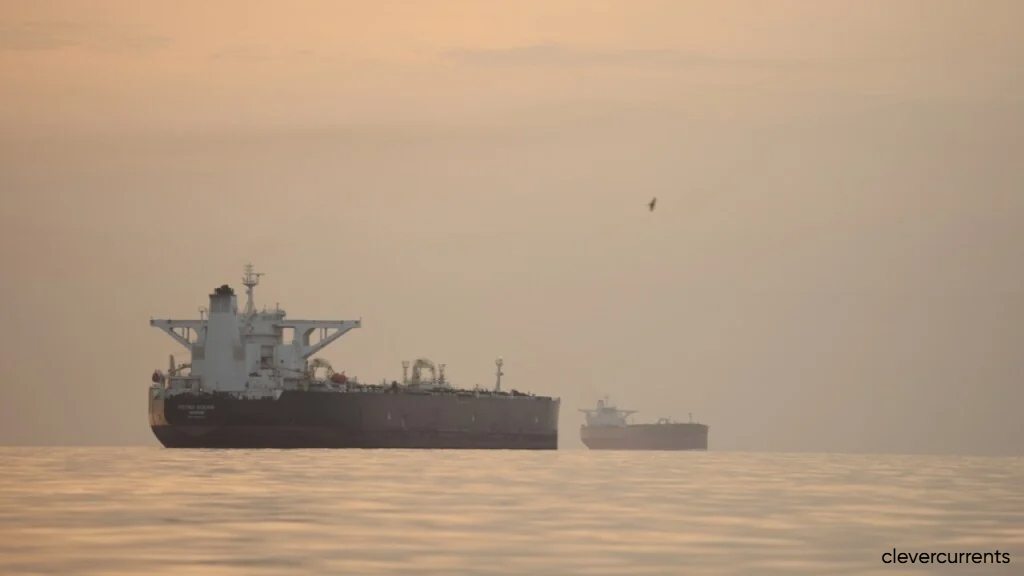
The already fragile situation in the Middle East has taken a dangerous turn as Iran launched attacks on three commercial ships in the Strait of Hormuz—one of the world’s most critical oil routes. The incident has intensified fears of a prolonged crisis that could disrupt global energy supplies and escalate geopolitical tensions.
⚠️ What Happened?
According to multiple reports, Iran’s paramilitary Revolutionary Guard opened fire on three vessels navigating through the Strait. Two ships were reportedly seized and taken toward Iranian waters, while a third was left stranded near the coast.
Iran claimed the ships had violated maritime regulations, accusing them of operating without proper authorization and manipulating navigation systems.
🕊️ Ceasefire in Question
The attacks came just hours after former U.S. President Donald Trump announced an extension of a ceasefire with Iran. Despite this, the U.S. continues to enforce a naval blockade on Iranian ports—creating a tense “ceasefire in name only” situation.
This contradiction highlights a critical reality: while direct military strikes may have paused, the conflict is still unfolding at sea.
🌊 Why the Strait of Hormuz Matters
The Strait of Hormuz is not just another shipping lane—it is a global energy lifeline:
- Nearly 20% of the world’s oil passes through it
- It connects the Persian Gulf to international waters
- Any disruption instantly impacts global markets
With attacks increasing, many shipping companies are avoiding the route, leading to reduced traffic and rising uncertainty.
📈 Global Impact
The consequences of these attacks are already visible:
- Oil prices surged above $100 per barrel
- Supply chains face delays and increased costs
- Asian economies, heavily dependent on Gulf oil, are at high risk
- Inflation concerns are rising globally
Even a partial disruption in the Strait can send shockwaves across the global economy.
🔥 A Strategic Move by Iran?
Experts believe Iran’s actions are not random. By targeting ships in the Strait, Tehran is leveraging its geographic advantage to pressure global powers—especially the United States—during stalled negotiations.
Control over this narrow waterway gives Iran significant influence over global energy flow, making it a powerful bargaining tool.
🧭 What Lies Ahead
With diplomatic talks stalled and both sides maintaining aggressive positions, the situation remains unpredictable. Continued attacks could:
- Trigger military retaliation
- Lead to a full maritime blockade
- Push oil prices even higher
For now, the world watches closely as tensions in the Strait of Hormuz threaten to spiral into a larger crisis.
🏁 Conclusion
The attack on three ships in the Strait of Hormuz is more than just a regional incident—it’s a global concern. As economic and political stakes rise, the need for diplomatic resolution becomes more urgent than ever.
If tensions continue to escalate, the ripple effects will be felt far beyond the Middle East—impacting fuel prices, trade, and everyday life worldwide.