
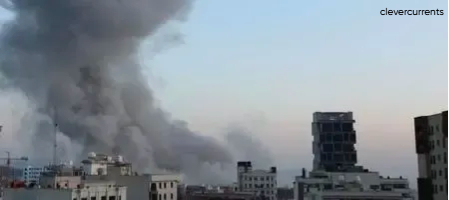
Tensions in the Middle East have reached a dangerous new peak after the United States launched a major airstrike targeting Iranian missile installations near the strategically critical Strait of Hormuz. The use of heavy “bunker buster” bombs signals a significant escalation in the ongoing conflict, raising concerns about global energy security and the possibility of a wider regional war.
What Happened?
According to recent reports, the US military carried out precision strikes on underground Iranian missile facilities located near the Strait of Hormuz. These strikes reportedly involved 5,000-pound (around 2,200 kg) bunker buster bombs, designed specifically to destroy deeply buried and fortified targets.
The operation targeted missile systems believed to pose a direct threat to international shipping lanes. US Central Command (CENTCOM) stated that these installations were part of Iran’s efforts to disrupt maritime traffic in the region.
Why the Strait of Hormuz Matters
The Strait of Hormuz is one of the most important chokepoints in the global oil supply chain. Roughly 20–30% of the world’s oil shipments pass through this narrow waterway, making it vital for global energy markets.
In recent weeks, Iran has reportedly used mines, drones, and missile systems to restrict movement through the strait, effectively threatening global oil supplies and causing prices to surge above $100 per barrel.
What Are ‘Bunker Buster’ Bombs?
“Bunker buster” bombs are advanced weapons designed to penetrate deep underground before exploding. Unlike conventional bombs, they can destroy:
-
Reinforced bunkers
-
Underground missile silos
-
Hardened military facilities
These bombs are often deployed by stealth aircraft like the B-2 bomber and are considered among the most powerful non-nuclear weapons in modern warfare.
Strategic Objective of the US
The primary goal of the US strike appears to be:
-
Neutralizing Iran’s anti-ship missile capabilities
-
Reopening the Strait of Hormuz for global trade
-
Sending a strong deterrent message to Tehran
US officials emphasized that the operation aims to restore freedom of navigation and reduce risks to international shipping.
Iran’s Response and Rising Tensions
Iran has strongly condemned the strikes and has previously warned of retaliation. The broader conflict has already seen:
-
Missile and drone attacks on US-linked targets in the Gulf
-
Strikes affecting countries like Saudi Arabia, UAE, and Qatar
-
Escalating military actions involving multiple regional actors
This raises fears of a full-scale regional conflict, potentially drawing in more countries.
Global Impact
The consequences of this escalation are already being felt worldwide:
1. Oil Prices Surge
With supply disruptions and uncertainty, global oil prices have risen sharply, affecting economies worldwide.
2. Trade Disruptions
Shipping companies face increased risks, insurance costs, and delays in one of the world’s busiest maritime routes.
3. Geopolitical Instability
The conflict risks expanding beyond Iran and the US, potentially involving allies and neighboring nations.
Conclusion
The US use of bunker buster bombs near the Strait of Hormuz marks a significant turning point in the ongoing conflict with Iran. While the immediate objective may be to secure vital shipping lanes, the long-term implications could reshape global geopolitics and energy markets.
As tensions continue to rise, the world watches closely—hoping for de-escalation but preparing for further uncertainty.