
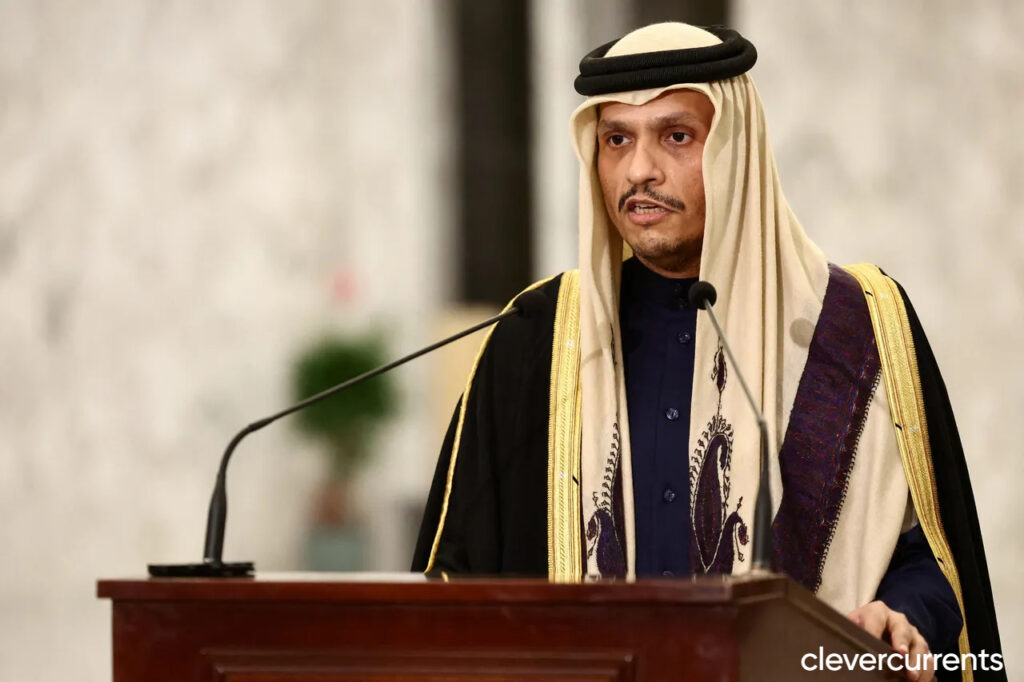
The escalating conflict in the Middle East has taken a dramatic turn after Qatar strongly condemned Iran’s missile and drone strikes on Gulf countries. Qatar’s Prime Minister and Foreign Minister, Sheikh Mohammed bin Abdulrahman Al-Thani, described the attacks as a “dangerous miscalculation” and said Doha felt a “big sense of betrayal” by Tehran’s actions.
The remarks highlight growing tensions in a region already on edge due to the widening confrontation involving Iran, the United States, and Israel.
Qatar Expresses Shock Over Attacks
Speaking in his first major interview since the attacks, the Qatari prime minister said the strikes came as a surprise, especially given Doha’s efforts to maintain constructive relations with Tehran. He stressed that Qatar had made it clear it would not take part in wars against its neighbors, making the attacks even more alarming.
“It is a big sense of betrayal,” Al-Thani said, noting that Gulf countries were targeted within hours of the start of the broader conflict.
According to him, Qatar had long attempted to maintain a balanced relationship with Iran while also acting as a mediator in regional conflicts. The sudden strikes, therefore, represent a major setback for diplomatic ties between the two countries.
A “Dangerous Miscalculation”
The Qatari leader warned that Iran’s attacks risk destabilizing the entire Middle East. He described the strikes as a strategic miscalculation that could drag more countries into the conflict and cause severe global economic consequences.
Al-Thani also rejected Iran’s claims that the attacks were aimed only at military targets, stating that a significant portion of strikes appeared to target civilian infrastructure, including utilities and other non-military facilities.
Such developments have intensified fears that the conflict could spiral into a broader regional war.
Economic and Global Implications
The crisis is not just a regional security issue—it also has global economic consequences. Qatar is one of the world’s largest producers of liquefied natural gas and a key supplier to international markets.
Any prolonged disruption in the Gulf could have far-reaching effects on:
-
Global energy supplies
-
Fertilizer production
-
Food supply chains
-
International shipping routes
Analysts warn that continued escalation could trigger sharp spikes in energy prices and further strain global markets.
Calls for De-Escalation
Despite his harsh criticism of Iran’s actions, the Qatari prime minister emphasized that diplomacy remains the only viable solution. He called on all sides—including the United States—to reduce tensions and return to negotiations.
“We continue to seek de-escalation,” he said, emphasizing that Iran and the Gulf states are neighbors and must eventually find a way to coexist peacefully.
A Region on Edge
The conflict between Iran and its rivals has already drawn several Gulf nations closer to the frontline. What began as a confrontation involving Iran, the U.S., and Israel is now increasingly affecting regional states that had hoped to remain outside the conflict.
For Qatar and its Gulf neighbors, the stakes are enormous. Beyond immediate security concerns, the crisis threatens diplomatic relations, economic stability, and the fragile balance of power in the Middle East.
As tensions rise and retaliatory strikes continue, the world is watching closely to see whether diplomacy can still prevent the conflict from spiraling into a full-scale regional war.